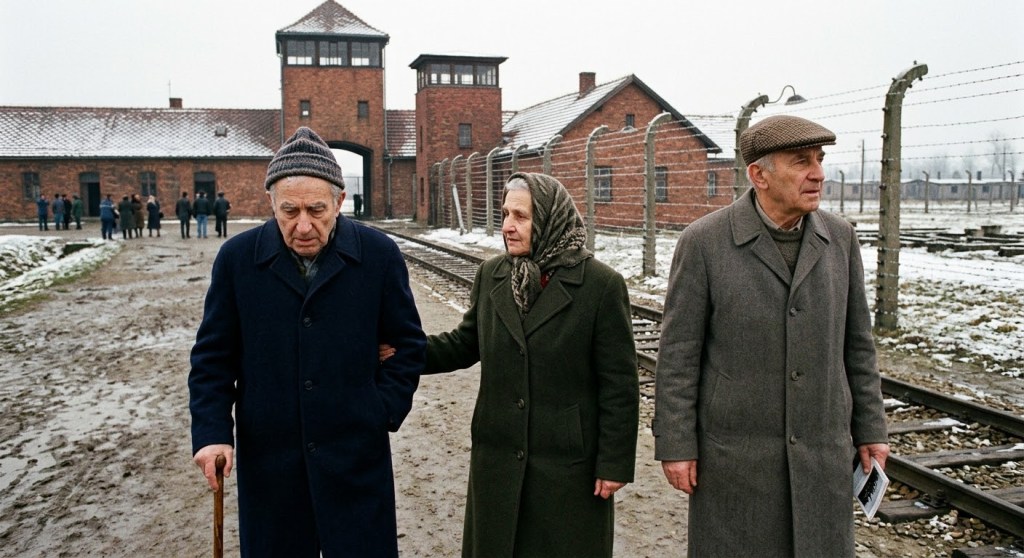
Holocaust survivor Elie Wiesel, who was imprisoned in the Auschwitz and Buchenwald concentration camps during the Second World War, described how he and his fellow prisoners were exposed to the constant threat of violence and death, as well as the horrific sounds and ghastly smells of the camps.
As they spent more time in the camps, their brains underwent a process of habituation, becoming desensitised to the dangers, sounds, smells and other hardships they faced.
Pavel Fischl, a young Czech poet who arrived in the Nazi-controlled Theresienstadt ghetto, described how people there quickly became accustomed to their horrific new surroundings:
“We have all gotten used to the noise of steps in the barracks’ hallways. We have already gotten used to those four dark walls surrounding each barracks. We are used to standing in long lines, at 7 a.m., at noon, and again at 7 p.m., holding a bowl to receive a bit of heated water tasting of salt or coffee, or to get a few potatoes.
“We are wont to sleep without beds, live without radio, record player, cinema, theatre, and the usual worries of average people.
“We have gotten accustomed to seeing people die in their own dirt, to seeing the sick in filth and disgust. We are habituated to wearing one shirt for a whole week; well, one gets used to everything.”
Steven Bartlett in The Diary of a CEO.


Leave a Reply